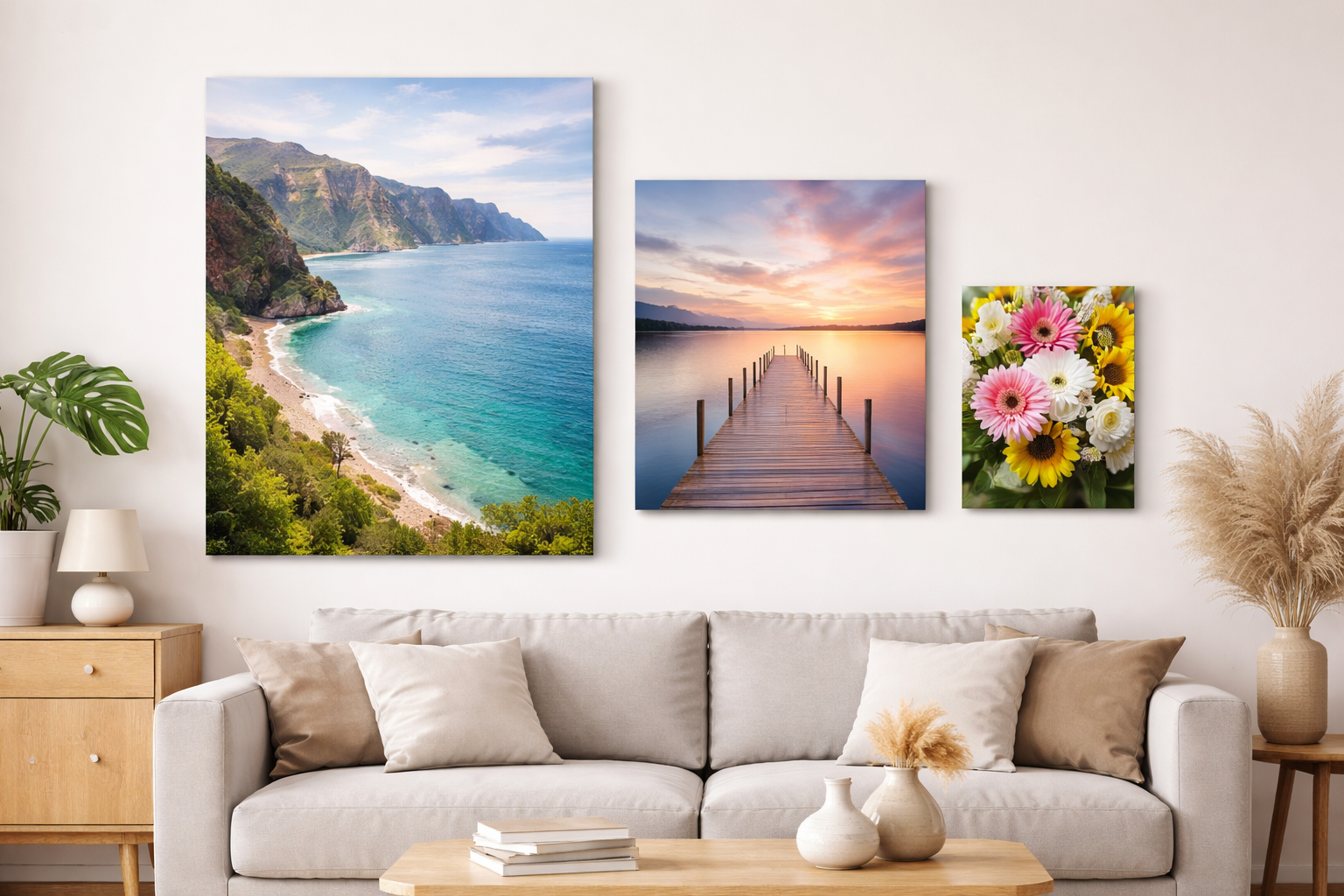
What Canvas Size Is Right for Your Wall? A Room-by-Room Guide
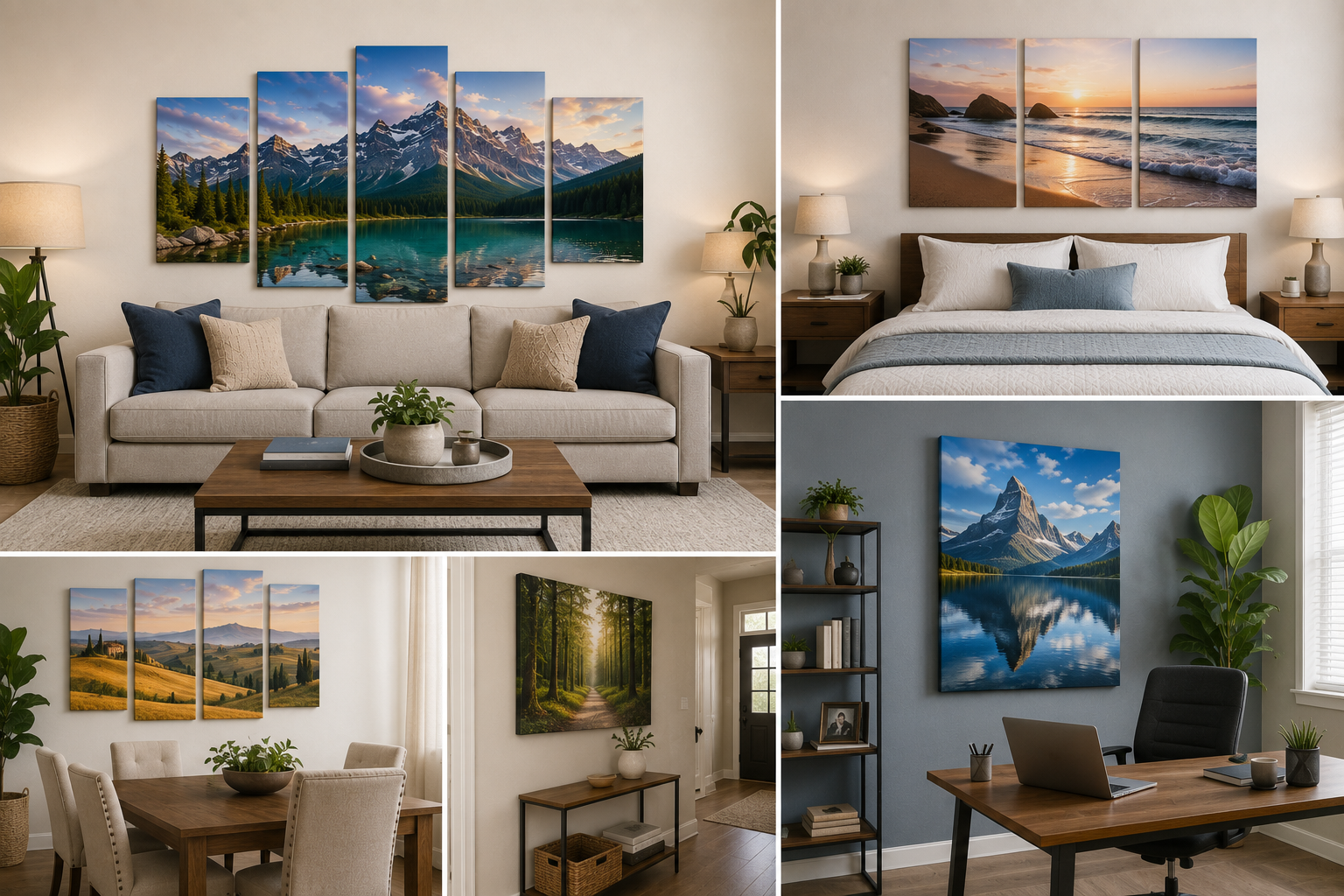
Have you ever brought home a stunning, carefully chosen piece of artwork, only to hang it on the wall and realise it looks completely lost? Or perhaps you’ve mounted a massive print that instantly makes your room feel cramped and overwhelming? If so, you are not alone. Getting the proportions right is one of the most common challenges in home styling.
Mastering canvas size selection for wall art by room (living room, bedroom, hallway, dining room, office, bathroom) with sizing formulas and layout tips is the secret to transforming a disjointed house into a beautifully curated home. When artwork is scaled correctly, it anchors the furniture, balances the architecture, and creates a sense of harmony.
In this comprehensive guide, we will walk you through the fundamental rules of interior design scale and proportion for wall decor, providing you with actionable formulas, room-by-room advice, and expert layout strategies to ensure your walls always look professionally styled.
The Golden Rules of Art Sizing: Formulas That Always Work
Before we dive into specific rooms, it is essential to understand the basic mathematics of wall styling. You do not need to be a designer to get this right; you simply need a tape measure and a calculator.
Formula 1: The Bare Wall Calculation
When you are dealing with a completely blank wall, the artwork should take up roughly 60% to 75% of the available empty space (the space not covered by furniture or mouldings).
Measuring wall area for proportional canvas fit:
- Measure the width and height of the blank wall space.
- Multiply both numbers by 0.60 to find the minimum canvas size.
- Multiply both numbers by 0.75 to find the maximum canvas size.
Example: If your blank wall is 200 cm wide and 280 cm high, your ideal canvas width is between 120 cm and 150 cm, and the height should be between 168 cm and 210 cm.
Formula 2: The Two-Thirds Rule
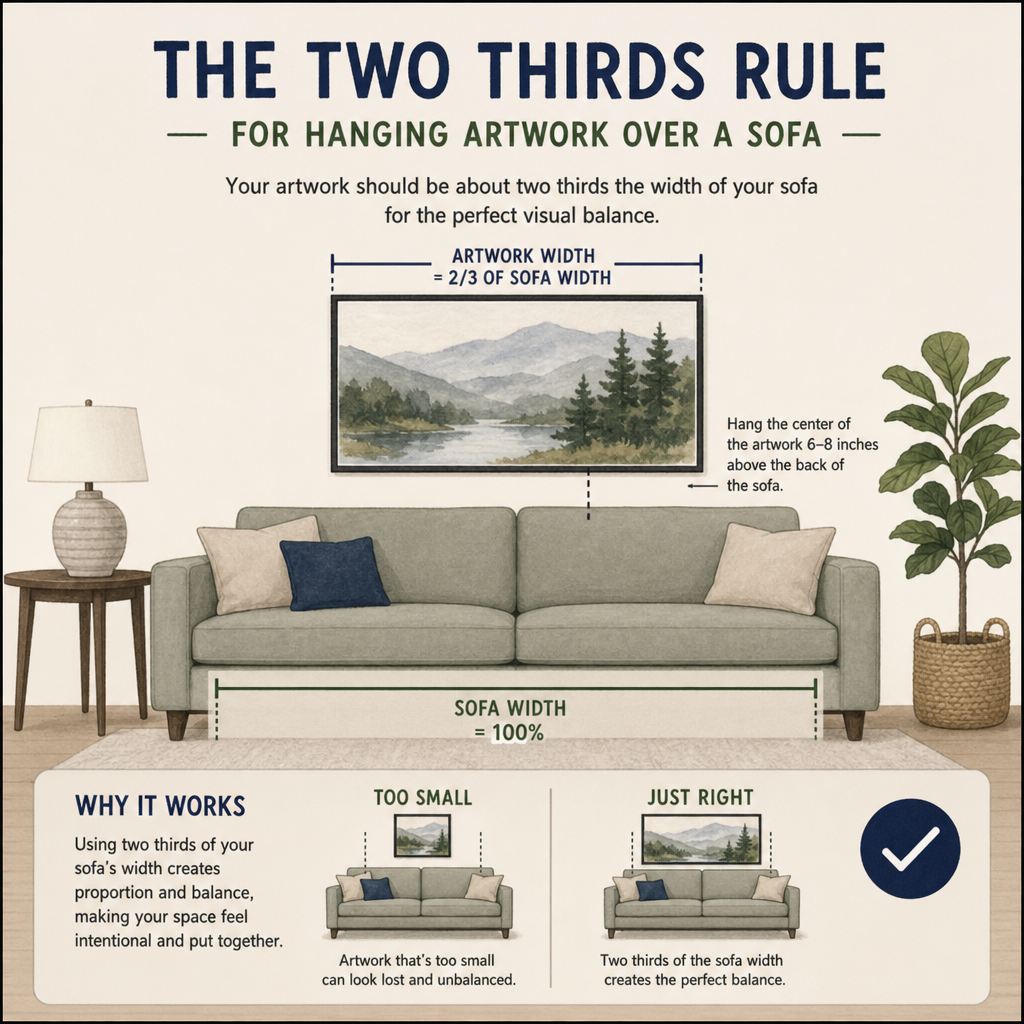
If you are hanging art above furniture—such as a sofa, a bed, or a console table—the width of the artwork should naturally relate to the furniture below it. The universally accepted standard is the two-thirds rule for wall art placement.
Your canvas (or collection of canvases) should span roughly 2/3 to 3/4 of the width of the furniture beneath it. Never choose a canvas that is wider than the furniture itself, as this creates a top-heavy, unbalanced look.
Room-by-Room Canvas Sizing Guide
Every room in your home serves a different purpose, meaning the way you view and interact with art will change as you move from space to space. Here is how to select the perfect canvas print sizes for every corner of your home.
The Living Room: Making a Grand Statement
The living room is typically the largest room in the house and the place where you entertain guests. Because of this, it is the perfect space to make a bold, impactful statement.
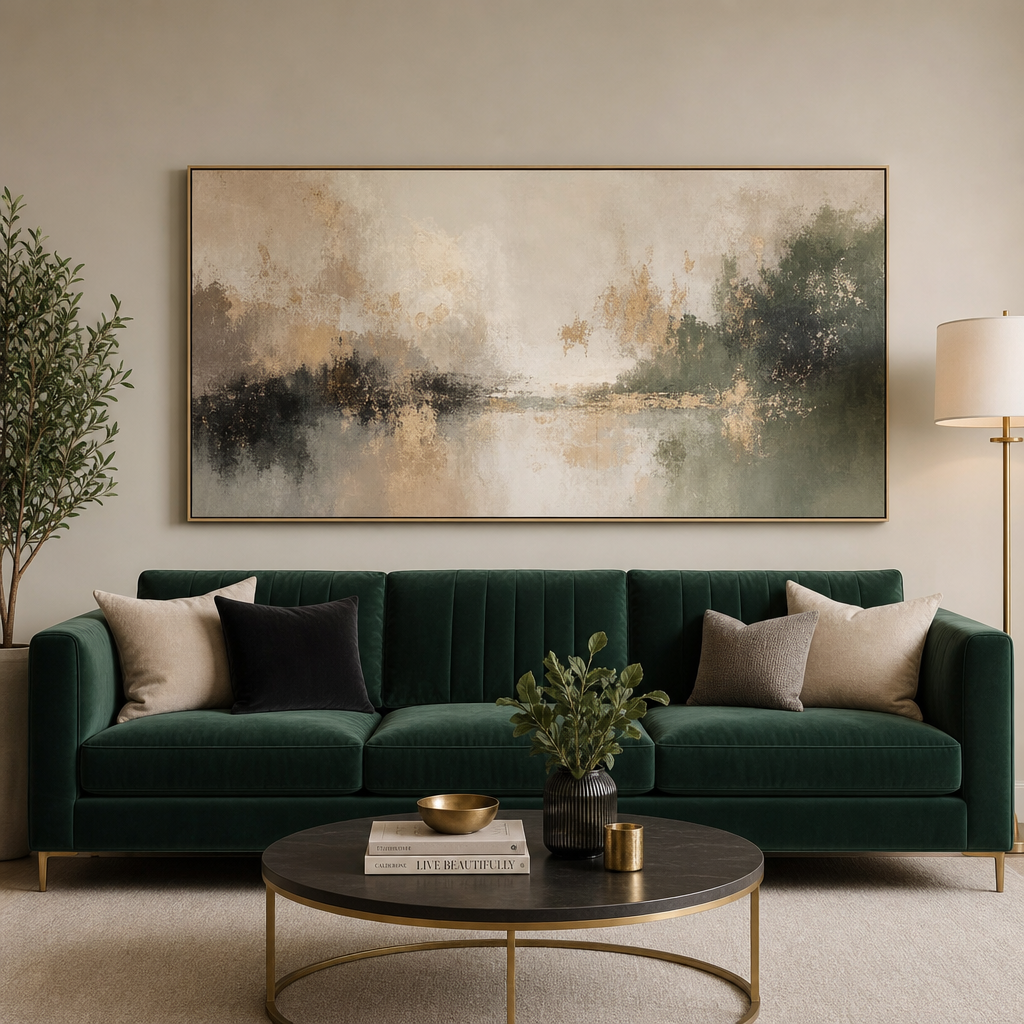
Finding the best canvas size for living room spaces usually comes down to the dimensions of your primary seating area. When choosing canvas prints for this space, use a simple wall art size calculator for sofa placements: measure your sofa's length and multiply it by 0.66. For a standard UK three-seater sofa (around 210 cm wide), your ideal canvas width is approximately 140 cm.
Layout Decisions:
- Triptych vs single large canvas living room: Large canvas prints (e.g., 100 x 150 cm) creates a sleek, modern, and dramatic focal point. However, if a single piece feels too imposing or is difficult to manoeuvre into your home, a triptych (one image split across three panels, or three coordinating pieces) is a brilliant alternative. A triptych effortlessly fills a large expanse of wall while adding a rhythmic, architectural feel to the room.
- High Ceilings: Wondering how to choose art size for vaulted ceilings? Rooms with soaring ceilings can dwarf standard artwork. In these spaces, orientation is key. Opt for oversized vertical canvases (portrait orientation) that draw the eye upwards, celebrating the architectural height. Alternatively, a large floor-to-ceiling gallery wall works wonders to fill the vast vertical void.
The Bedroom: Creating a Serene Sanctuary
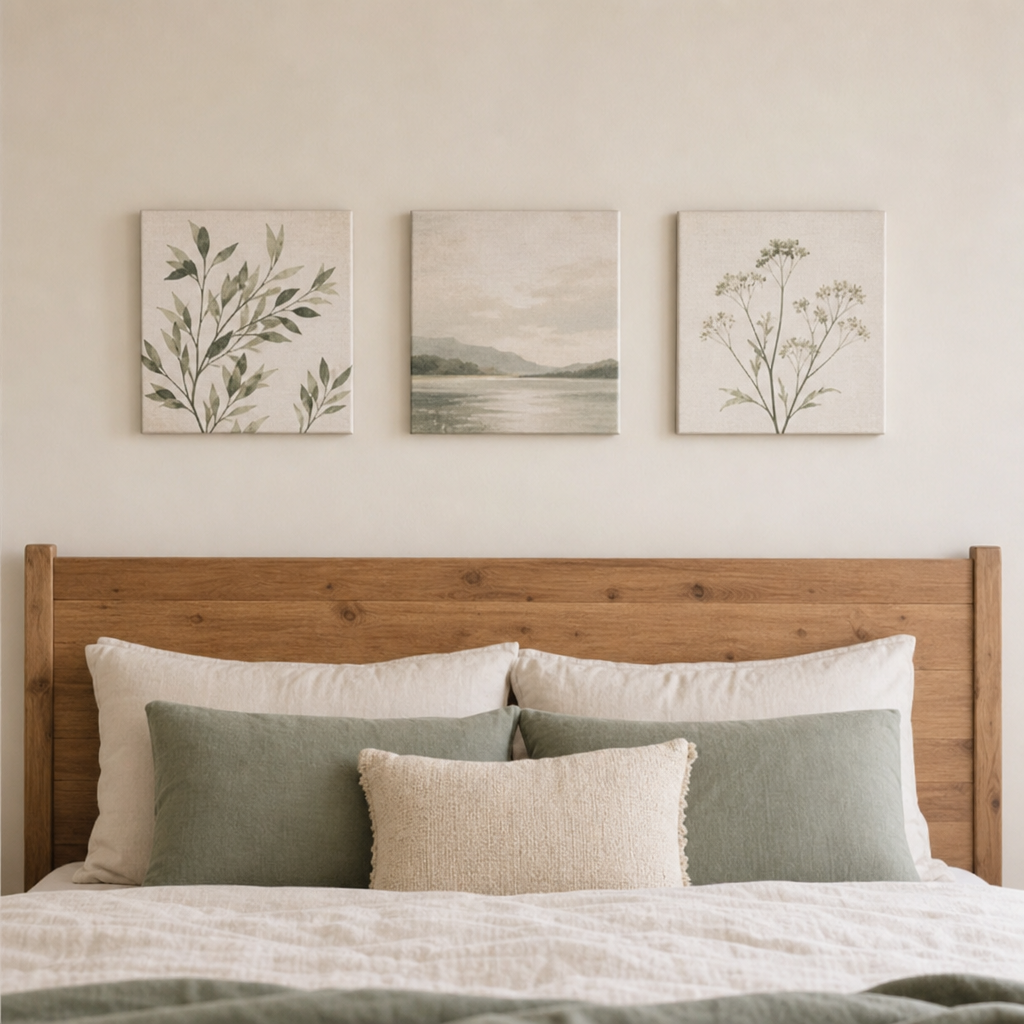
Your bedroom should be a sanctuary of rest and relaxation. Artwork here is typically hung directly above the bed, serving as a visual extension of the headboard.
When determining the size, use the width of your mattress or headboard as your anchor. For a standard UK King-size bed (150 cm wide), a canvas around 100 cm wide is visually pleasing.
A frequent dilemma is knowing exactly how high to hang pictures over headboard. The bottom edge of your canvas frame should sit roughly 15 to 25 cm (6 to 10 inches) above the top of the headboard. If you hang it any higher, the art will appear to "float" away from the bed, breaking the visual connection between the two elements. If you do not have a headboard, measure from the top of your pillows instead.
The Dining Room: Setting the Perfect Scene
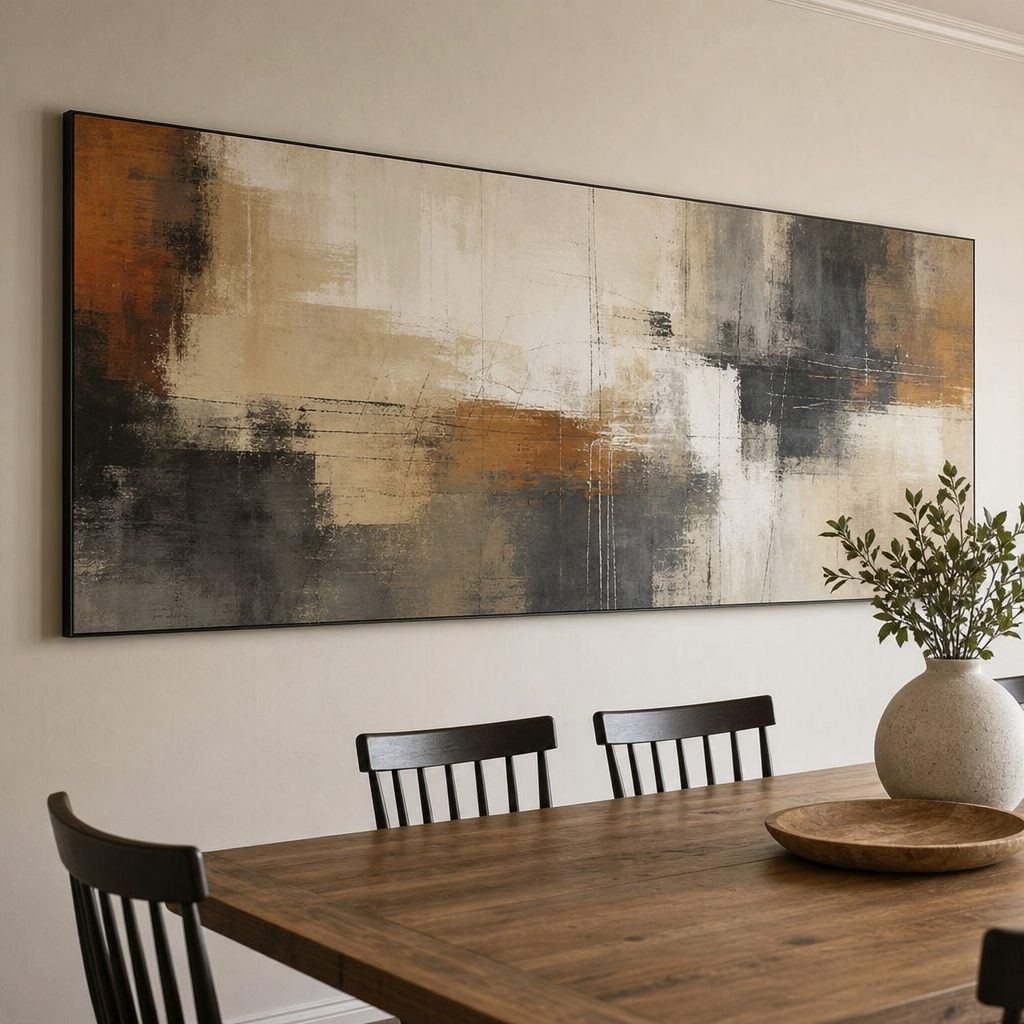
In a dining room, the viewing dynamic changes. Your guests will spend the majority of their time sitting down, which means the artwork should be positioned slightly lower than in a hallway or living room to ensure it remains at a comfortable eye level.
When looking at standard dimensions for dining room wall art, you need substantial pieces that won't be overshadowed by the dining table and chairs. A popular approach is to mirror the shape of the table. If you have a long rectangular table, a wide panoramic canvas (e.g., 60 x 120 cm) or a series of three square prints works beautifully. For a round table, a large square canvas (e.g., 90 x 90 cm) creates a brilliant sense of symmetry.
Hallways and Stairs: Guiding the Eye
Hallways are transitional spaces. Because you are constantly moving through them, they are ideal for narrative artwork, sequential pieces, or family galleries.
When looking for hanging art in narrow hallways tips, the most important rule is to avoid overly deep or massive canvases that protrude too far from the wall, as these can make the space feel claustrophobic and are easily bumped into. Instead, opt for multiple smaller canvases (such as a row of 30 x 40 cm prints) spaced evenly down the length of the corridor to draw the eye forward.
For the tricky, narrow slivers of wall between doors, rely on proportional art placement for vertical walls. Stack two or three small square canvases vertically. This fills the awkward gap perfectly, elevating the space without overwhelming it.
The Home Office: Inspiring Productivity
Since the rise of remote working, the home office has become a crucial space. The artwork you choose here should inspire focus, creativity, and calm.
When styling this room, it is vital to consider the visual weight of artwork in home offices. "Visual weight" refers to how much a piece draws the eye based on its colour, contrast, and framing. A massive, heavy, dark-coloured canvas can feel oppressive and distracting when you are trying to concentrate. Conversely, light, airy, abstract, or botanical prints on a medium-sized canvas (such as 50 x 70 cm) positioned in your line of sight or just above your desk can provide a refreshing visual break for tired eyes.
The Bathroom: Adding a Touch of Luxury
Bathrooms are often neglected when it comes to wall decor, but a well-placed canvas can instantly elevate a functional bathroom into a luxurious, spa-like retreat. (Note: Always ensure your bathroom is well-ventilated if you are hanging canvas, or opt for specially treated moisture-resistant finishes).
The key here is finding the optimal eye level for wall decor in bathrooms. Unlike other rooms, you need to consider where you are when you view the art. If the piece is opposite the toilet or the bathtub, hang it slightly lower so it is at eye level when seated. If it is next to a mirror or vanity where you stand, use the standard gallery height (145 cm to 150 cm from the floor to the centre of the canvas).
Because wall space in bathrooms is usually broken up by tiles, mirrors, and windows, smaller pieces—such as 20 x 30 cm or 40 x 40 cm canvases—tend to work best.
Designing Your Display: Layouts and Spacing
Once you have determined the right sizes for your rooms, you need to decide how to arrange them.
The Great Debate: Large Scale Canvas vs Gallery Wall Layout
Choosing between one oversized canvas and a gallery wall of smaller prints changes the entire mood of a room.
- Large Scale Canvas: Best for a clean, minimalist, and contemporary aesthetic. It acts as a bold focal point, reduces visual clutter, and makes small rooms appear larger.
- Gallery Wall Layout: Ideal for eclectic, maximalist, or traditional interiors. It allows you to showcase a diverse collection of memories, colours, and textures. However, it requires careful planning to avoid looking messy.
Spacing Your Canvases
If you are hanging a diptych, triptych, or a curated gallery wall, spacing is just as critical as size. What is the minimum spacing between multiple canvas frames?
As a rule of thumb, leave 5 to 8 cm (2 to 3 inches) between canvases. If they are spaced too closely, they look cramped; if they are spaced too far apart, they lose their relationship to one another and look like floating islands on your wall. Keep the spacing consistent across all sides for a clean, professional finish.
Pitfalls to Sidestep: Mistakes to Avoid
Even armed with the right formulas, it is easy to make a misstep in the heat of the decorating moment. Here are the most common mistakes when choosing canvas dimensions and how to avoid them:
- The Postage Stamp Effect: Hanging a tiny 30 x 40 cm canvas by itself in the middle of a massive, 4-metre-wide blank wall. The art will look entirely swallowed up by the space. Always scale up for large walls.
- The "Museum Ceiling" Hang: Hanging art far too high is the most frequent interior design sin. Unless adjusting for a dining room or bathroom as mentioned above, the centre of your canvas (not the top hook) should sit roughly 145 cm (57 inches) from the floor. This is average human eye level and is the standard used in professional galleries globally.
- Ignoring the Frame: When you buy a rolled or stretched canvas and decide to add a floating frame later, you must account for the frame's thickness in your measurements. A thick bespoke frame can add 10 to 15 cm to the overall width and height, completely throwing off your two-thirds rule calculations if not accounted for.
Final Thoughts
Selecting the perfect artwork for your home is an incredibly rewarding process that blends personal taste with a touch of mathematical precision. By paying close attention to the scale of your furniture, understanding the function of each room, and trusting the foundational rules of proportion, you can confidently invest in pieces that will look bespoke to your space.
Grab your tape measure, run your calculations, and start transforming your blank walls into a beautifully proportioned, captivating display.