Canvas Prints vs Framed Photo Prints: Which Suits Your Photograph?
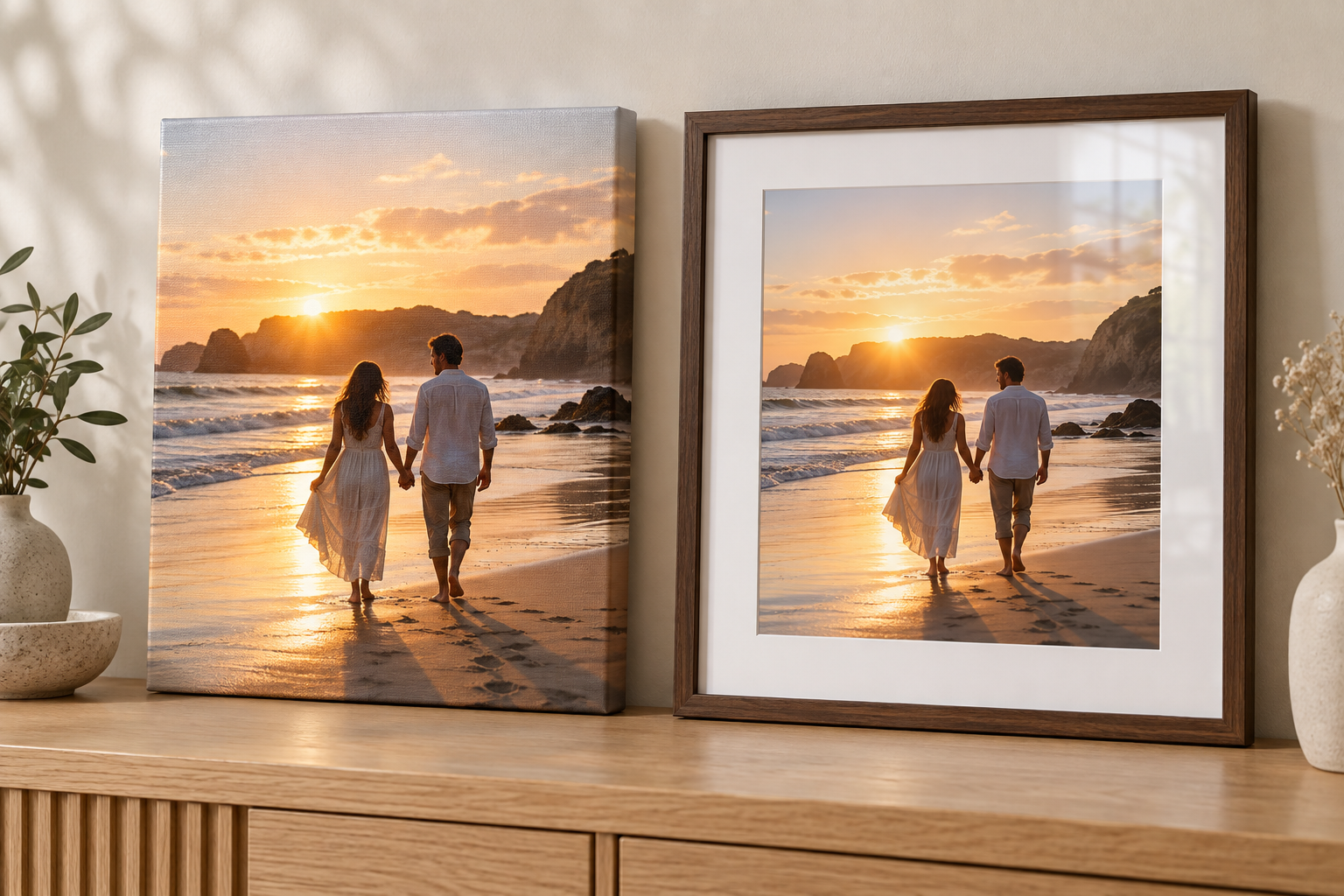
The same photograph can look genuinely different depending on how you print it. As a canvas print, a family portrait becomes textured wall art with real depth. Printed on smooth photo paper and set inside a frame, that same photo takes on a crisper, more traditional finish.
So which one's right for your photo? Start with the image itself. Canvas suits photos where mood, colour and a relaxed feel matter most. Framed prints tend to win when you want people to appreciate fine detail up close.
Your room, your lighting and how big you want it also play a part. Here's how to land on the right finish for your picture and your home.
What's the Difference Between Canvas and Framed Prints?
A canvas print reproduces your photo on a woven material, stretched over a wooden support. That texture becomes part of how the image looks, and the print can go straight on the wall without any outer frame.
A framed photo print, on the other hand, is a photo printed on paper and set inside a frame — often with a mount between the image and the frame edge, and a sheet of glass or acrylic over the top for protection.
There's a third option worth knowing about too: a framed canvas, which adds an outer frame around a canvas print. That's a different product from what we're comparing here — this article is about canvas versus a photo printed on paper.
|
Feature |
Canvas prints |
Framed photo prints |
|
Surface |
Woven texture |
Smooth photographic paper |
|
Presentation |
Image-led, with visible depth |
Defined border, optional mount |
|
Fine detail |
Texture can soften very small details |
Smooth paper shows fine detail more clearly |
|
Reflections |
Usually low-glare, no glazing |
Depends on the paper finish and glazing |
|
Overall size |
Close to the canvas's own dimensions |
Frame and mount can add noticeably to the outer size |
Which Format Suits Your Photograph?
Family Portraits and Candid Moments
For a warm, informal family photo, custom canvas prints give it a relaxed, lived-in feel. Photos with clear expressions, simple backgrounds and strong composition tend to work best as a single canvas.
Go with a framed photo instead when small details matter — embroidery on a christening outfit, or several faces in a group shot where you want every expression sharp. Whichever you choose, give each person enough room in the frame so nobody gets cropped or crowded.
Architecture and Detailed Travel Photos
Photos full of fine lines, signage or intricate buildings usually do better on a smooth surface. Framed photo prints keep those details sharp, without canvas's weave softening the edges.
That said, canvas can still be the better call for a travel photo when it's really about the colour or the atmosphere rather than the detail — a seaside sunset, a misty hillside, a quiet coastal view from across the room. Detail-first, go framed. Mood-first, go canvas.
Wedding Photos and Black-and-White Images
There's no single right answer for wedding photos. A close-up portrait with a quiet, blurred background can look stunning on canvas. A detailed group shot from the ceremony usually suits paper better.
For black-and-white images, think about contrast and texture together. Smooth paper brings out fine tonal shifts — the difference between charcoal and true black. Canvas adds its own visible texture on top of that, which some people love and others find distracting. Go with whichever effect you actually enjoy looking at, rather than picking based on the occasion alone.
Texture, Colour and Image Quality
The core difference in canvas prints vs photo prints comes down to the surface receiving the image. Canvas photo prints add a woven texture that becomes part of the photo's character. Photo paper is smoother, which is why it handles fine lines and small details better.
Neither one automatically gives you better colour — that comes down to your original file, the printing process, the inks and the finish you pick. Worth remembering too: a photo on a bright screen almost always looks different once it's printed, whichever material you choose.
Use your original image file wherever you can, and check it for blur before you order. Upscaling a small file won't bring back detail that was never there in the first place. Canvas texture can hide small imperfections, but it won't turn a genuinely out-of-focus shot into a sharp one — so check the recommended resolution for your chosen size and pay attention to any quality warning during upload.
Lighting and Reflections
Where you hang a photo changes how easily anyone can actually see it. Glass or acrylic glazing can catch reflections from windows, ceiling lights and lamps, making parts of a framed print hard to view from certain angles.
Canvas, displayed without glazing, usually gives you fewer distracting reflections — that's one of its quieter advantages. It's not completely glare-proof, though; some finishes and coatings behave differently, so don't assume it's immune.
Before you commit to canvas or framed, stand where you'd actually view the picture day to day. Notice the windows and lamps nearby, and consider whether a different wall would work better. Either way, keep both formats out of prolonged direct sunlight — it fades photos regardless of what they're printed on.
Match the Display to Your Room
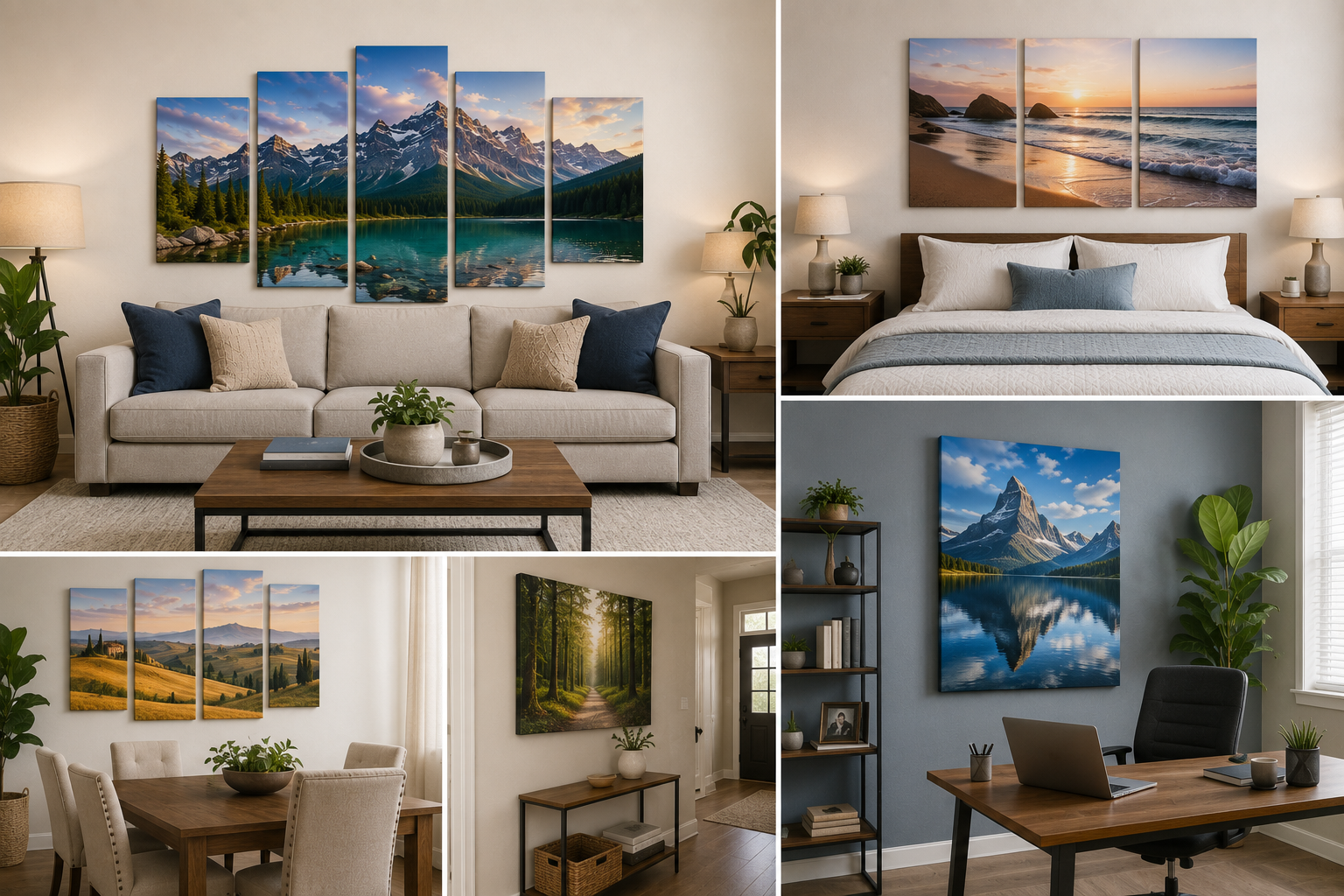
Canvas fits naturally into a relaxed living room, bedroom or open-plan space where you want the photo itself to lead the room. A frame does the opposite job well — it creates a clear boundary and ties the photo into existing furniture, shelving or other framed artwork nearby.
Measure your full display area before you order anything. For framed photos specifically, double-check whether the advertised size is the image itself or the outer frame — a mount can add a surprising amount of space around the actual photograph.
For help getting the proportions right, CanvasChamp UK's room-by-room canvas size guide is worth a look, and the same careful measuring applies just as much to framed pictures.
You can mix both formats on one wall, too — a gallery arrangement doesn't have to be all-canvas or all-frames. Repeat a colour, a subject or a consistent gap between pieces and it'll read as one connected display rather than a mismatched collection.
Cost and Care
Canvas isn't automatically the cheaper option — it depends on the sizes you're comparing and what you include in the total. For framed prints, factor in the frame, mount, glazing and any hanging hardware alongside the print itself; for canvas, extra framing or finishing options can push the price up too.
Care differs a bit by material. Follow whatever cleaning instructions come with your print, never spray cleaner directly onto the artwork, and handle prints by their edges or frame rather than the surface. Keep both away from damp rooms and direct heat sources, and pick wall hardware suited to the finished weight — a small picture hook won't hold a large framed piece the way it holds a lightweight canvas.
Choose the Finish That Suits Your Photo
Go with canvas when you want visible texture, minimal borders and a photo that reads well from normal room-viewing distance. Go with framed when fine detail, a mount or a specific frame style matters more to you than texture.
CanvasChamp UK offers both canvas and framed print options, so you can compare formats around your actual photograph rather than guessing. Check the available sizes and finishes before you decide, and give the image room to be properly seen, whichever way you go.
Frequently Asked Questions
Are canvas prints better than framed prints?
Neither wins for every photo — it depends on what your image needs. Canvas gives you texture and a relaxed look; framed paper prints suit detailed images and a more polished, formal presentation.
Do framed photo prints always have glare?
No. It comes down to the glazing type, the paper finish, your lighting and the angle you're viewing from. Check the specific product's glazing option rather than assuming every frame behaves the same way.
Can I display canvas and framed photos together?
Yes, and it often looks better than sticking to one format. Use a shared colour palette, related subjects or consistent spacing to tie the pieces together, and plan the layout around each piece's full outer dimensions, frame included.