Bronze vs Marble vs Resin vs Fibreglass: Statue Material Guide
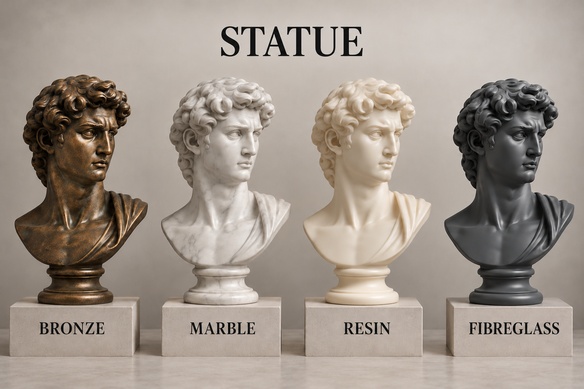
A statue can look perfect in a product photo and still be the wrong choice for your space. A marble bust needs a strong shelf. A bronze garden sculpture needs a secure base. A painted resin figure may fade in a sunny window.
The material decides how heavy a statue is, what it costs, how long it lasts and where you can put it. This guide compares the four most popular statue materials – bronze, marble, resin and fibreglass – so you can choose the right one for your home, garden or gift.
Which Statue Material Should You Choose?
Choose bronze for the longest-lasting outdoor statue, marble for natural stone indoors, resin for affordable and detailed indoor pieces, and fibreglass for large, lightweight statues that can live outside.
For UK gardens, bronze and fibreglass cope best with rain and frost. Marble is best kept indoors or under cover, and standard resin should stay out of direct sun.
Bronze vs Marble vs Resin vs Fibreglass
|
Feature |
Bronze |
Marble |
Resin |
Fibreglass |
|
What it is |
Copper-based metal alloy, cast in a foundry |
Natural stone, carved by hand or machine |
Polymer, often mixed with stone or metal powder |
Glass fibres set in resin (GRP), usually hollow |
|
Weight (approx. 60 cm statue) |
10–25 kg (hollow-cast) |
40–80 kg |
3–10 kg |
2–6 kg |
|
Typical UK price (60 cm) |
£400–£2,000+ |
£300–£1,500+ |
£40–£250 |
£150–£800 |
|
Outdoors in UK weather |
Excellent |
Fair: frost and acid rain can damage it |
Poor to fair: only if UV-rated |
Good, with a UV-stable coating |
|
Lifespan |
Generations |
Decades indoors |
5–15 years |
15–30 years |
|
Maintenance |
Wax about once a year outdoors |
Dust; avoid acids; seal if outside |
Dust; keep out of strong sun |
Wash; touch up paint when needed |
|
Best for |
Garden statement pieces, memorials, heirlooms |
Busts, classical figures, indoor focal points |
Gifts, figurines, colourful or detailed designs |
Large garden, commercial and event statues |
Weights and prices are approximate and vary with size, detail, artist and construction.
What Should You Know About Bronze Statues?
Bronze is the most durable statue material and the best long-term choice for outdoor display. It suits buyers who love the look of metal and want a piece that can be passed down for generations.
Most bronze sculptures are made by lost-wax casting, in which a wax model is turned into a mould and filled with molten metal. Finishes range from warm brown and golden tones to deep black and the classic blue-green patina.
Advantages of bronze
• Built to last outdoors. Bronze copes with rain, frost and UK winters far better than stone or standard resin.
• Fine detail. Casting captures texture, movement and facial features, ideal for figures, animals and memorials.
• Gains character with age. A natural patina develops over time and helps protect the surface.
• Hollow casting is normal. Most quality bronze statues are hollow-cast, which keeps the weight manageable. Hollow doesn't mean fake or poorly made.
Limitations of bronze
• Higher price. Foundry casting is labour-intensive, so genuine bronze costs more than resin or fibreglass.
• Surface changes outdoors. Rain, pollution and salt air can cause streaking or uneven colour. A coat of microcrystalline wax about once a year keeps the patina even.
• Weight for large pieces. Life-size bronzes need a solid base and professional fixing.
Best for: garden centrepieces, memorials, heirloom gifts and statement artwork. Browse our bronze statues.
What Should You Know About Marble Statues?
Marble is natural stone, and no two pieces are exactly alike. It suits buyers who want classical elegance, visible craftsmanship and the unique veining only real stone can offer.
Always ask for photos of the actual statue: the colour and veining can differ from catalogue images.
Advantages of marble
• Natural beauty. Every piece has its own veining and tone.
• Classic look. Perfect for busts, classical figures and Greek- or Roman-style sculpture.
• Visual weight. Even a small marble piece feels substantial on a console table, pedestal or hallway plinth.
Limitations of marble
• Heavy. A marble statue is several times heavier than a resin or fibreglass statue of the same size, so check that your shelf, pedestal or floor can take it.
• Sensitive to acids. Vinegar, lemon and many household cleaners can etch the surface. Use a pH-neutral stone cleaner.
• Not ideal for UK gardens. Over time, acid rain can roughen the surface, and frost can crack porous or damaged stone. Keep marble indoors, in a conservatory or under a covered porch.
• Fragile details. Thin fingers, noses and projecting edges chip easily, so handle with care.
Best for: busts, indoor focal points and classical decor. See our marble statues and bust statues.
What Should You Know About Resin Statues?
Resin is the most affordable and versatile statue material. "Resin" covers a family of polymers, often mixed with stone powder, metal powder or other fillers and finished with paint or coatings. That's why resin can look like bronze, marble, wood or bright painted colour.
Advantages of resin
• Affordable. Resin statues usually cost a fraction of bronze or carved marble.
• Highly detailed. Moulds capture fine features, which makes resin popular for figurines, personalised statues and replicas.
• Light and easy to move. Ideal for shelves, desks and gifts.
• Any finish. Painted, metallic, stone-effect or clear.
Limitations of resin
• Sunlight can fade it. Standard resin and paint can yellow, fade or crack in strong sun unless the product is UV-rated.
• Not always weatherproof. Only put resin outside if the seller confirms it is suitable for outdoor use, including the paint and coating.
• Can break if dropped. Resin is lighter than stone but can chip or snap at thin points.
Best for: gifts, indoor decor, personalised figures and colourful designs. Create a custom statue from your own photo.
What Should You Know About Fibreglass Statues?
Fibreglass (glass-reinforced plastic, or GRP) is the best choice for large statues that need to be light and weather-resistant. Layers of glass fibre are set in resin to create a strong, hollow shell, which is why a life-size fibreglass figure can weigh less than a small marble bust.
Advantages of fibreglass
• Very lightweight. Large and life-size statues can be moved by two people.
• Weather-resistant. With a UV-stable gelcoat or paint, fibreglass handles UK rain and frost well.
• Ideal for big pieces. Popular for garden statement pieces, shop displays, events and theme decor.
• Good value at large sizes. Much cheaper than bronze or marble once a statue is over about 1 metre.
Limitations of fibreglass
• Needs securing outside. Because it's light, wind can tip it over. Bolt it to a base or weight the inside.
• Paint may need touching up. After several years outdoors, the surface finish can dull.
• Feels less premium up close than solid bronze or real stone.
Best for: large garden statues, commercial displays and event decor. Explore our fibreglass sculptures.
Is Cold-Cast Bronze the Same as Cast Bronze?
No. Cold-cast bronze is resin mixed with bronze powder, while cast bronze is solid metal poured as a molten alloy.
Cold-cast bronze looks and feels convincingly metallic, especially when polished, and costs far less. It is lighter and less durable outdoors than true foundry bronze.
The same applies to stone: "marble effect" or "faux marble" usually means resin or marble powder mixed with a binder, not carved natural marble. Always check the exact material in the product description before you buy.
|
Label you see |
What it usually means |
|
Cast bronze / foundry bronze |
Solid metal alloy, cast hot |
|
Cold-cast bronze / bronze resin |
Resin with bronze powder |
|
Bronze finish / bronze effect |
Painted or coated resin or fibreglass |
|
Carved marble / natural marble |
Real stone |
|
Cultured or bonded marble |
Marble powder with resin binder |
|
Marble effect |
Paint or print on resin or fibreglass |
What Is the Best Statue Material for UK Gardens?
Bronze is the best statue material for UK gardens, followed by fibreglass with a UV-stable finish. Both handle rain, frost and winter temperatures without cracking.
|
Material |
Rain |
Frost |
Strong sun |
Verdict for UK gardens |
|
Bronze |
Excellent |
Excellent |
Excellent |
Best choice |
|
Fibreglass |
Good |
Good |
Good with UV coating |
Great for large pieces |
|
Marble |
Fair |
Risk of cracking |
Good |
Covered spots only |
|
Resin |
Fair |
Risk of cracking |
Fades unless UV-rated |
Mainly indoors |
UK garden tips:
• Stand statues on a level paving slab or plinth, not bare soil, to stop them sinking or tilting.
• Raise them slightly so water can't pool around the base in winter.
• Secure lightweight statues against wind.
• In very cold spells, bring small resin or marble pieces into a shed or garage.
Find outdoor-ready designs in our sculpture collections, including horse statues and angel sculptures.
What Should You Check Before Buying a Statue?
Start with where the statue will go, then check these seven points:
• Size: will it fit without crowding nearby furniture or plants?
• Weight: can your shelf, pedestal or floor take it?
• Material: is it cast bronze, carved marble, resin, fibreglass or a composite?
• Finish: is it painted, patinated, polished or coated?
• Indoor or outdoor: does the seller confirm it is suitable for outdoor use?
• Delivery: are unpacking, lifting and installation included for heavy pieces?
• Care: does it come with written cleaning instructions?
Compare the total cost, including delivery, installation and future upkeep. A cheaper statue that fades after two summers can cost more in the long run.
How Do You Care for Different Statue Materials?
For every material, start with gentle dusting using a soft brush or microfibre cloth, and follow the care instructions for your specific piece.
|
Material |
Clean with |
Avoid |
Extra care |
|
Bronze |
Mild soapy water, then rinse and dry |
Metal polish on patinated finishes |
Microcrystalline wax about once a year outdoors |
|
Marble |
pH-neutral stone cleaner |
Vinegar, lemon and bleach |
Wipe spills immediately; seal if displayed outside |
|
Resin |
Damp soft cloth |
Solvents, abrasive pads |
Keep out of strong direct sun |
|
Fibreglass |
Mild soapy water |
Pressure washers at close range |
Touch up paint chips to keep water out |
For antique, valuable or damaged statues, ask a professional conservator before cleaning or repairing.
Conclusion
The right statue material depends on where it will live and how long you want it to last. Bronze is for gardens and heirlooms, marble for classic indoor elegance, resin for affordable gifts and detail, and fibreglass for big statement pieces. Explore our full sculpture collections or design a custom statue of your own.